I wear nylon hiking pants and a nylon, long sleeve, button up shirt, when hiking. In my clothes bag I usually carry the following:
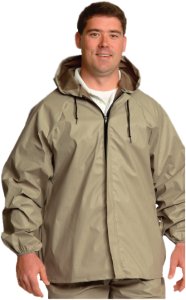 Set of “paper” rain gear. Right now, I’m carrying Drop Stoppers the top and bottom together weigh 10.5 ounces (311 grams). I like the jacket because it is long, and has pockets but I don’t like the pants because without a drawstring waist they get pushed down lower and lower by my pack and the cuffs don’t have elastic on them so they drag in the mud. I like Frogg Toggs because they look better, which is nice if you are trying to be seated at a restaurant while your hiking clothes are washing. They are also fuzzy which I like because they make nice pajamas and are comfortable for hanging out in. Frogg Toggs are a little heavier, a little more durable, and better looking. The also cost a lot more and take longer to dry out. The pants have elastic at the cuffs and side zips and a drawstring waist. They weigh 14 ounces for top and bottom combined. I have carried the O2 jacket, which is light and worked well too. To repair a rip in “paper” rain gear use clear packing tape.
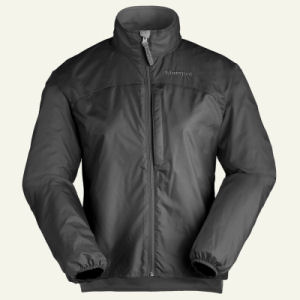 Marmot dri-clime windbreaker. A nylon windbreaker with a light micro-fleece liner. It weighs 10 ounces (283 grams). I like this jacket; it works for varying temperatures and is quick drying. This jacket has the manufacturer’s name plastered across the front of it. I took a sharpie and went over it to make it less noticeable. I really don’t like to have names on my clothes so if I find something like it without a name on it; it will be replaced. If you are are on a tight budget this item could be replaced with either a light wind breaker or light fleece top from a discount store like Target or Walmart or a thrift store.
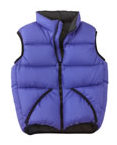
Feathered Friends down vest. It weighs 11 oz (311 grams). When I bought this, 6 years ago, it was the lightest around, now you can get a whole down jacket from Western Mountaineering for the same 11 oz. or the down vest for only 5 oz (141 grams). For budget minded you can probably find a poly filled nylon vest at the discount stores for 10 dollars even less at the thrift store.
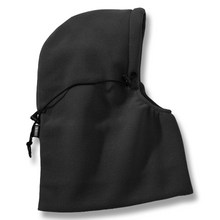 Fleece hood/balaclava – This can be worn as a neck warmer, a hat, headband, a hood, or full balaclava. Extremely versatile and it doesn’t fall off when I’m sleeping. If your head and heart are kept warm, the rest of your body will follow. These come in different colors, from different manufacturers, in case you don’t want to look like a Ninja. This winter, Walmart was selling these for 4 dollars.
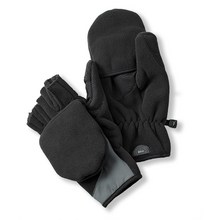 Fleece glo-mits I have carried glo-mitts for all my hikes. I like glo-mitts because I don’t have to take off my gloves to do things like light my stove and cook dinner. I think it’s the wind block fabric that makes these so slow to dry, but they keep my hands warm even when wet. Not all glo-mitts come with the thumb flap; I find the thumb flap to be essential. Wallmart sells ones like these in the hunting section for something like 4 dollars.
 Extra socks- pair of neoprene socks- since I wear sandals when I hike; I wear these when it is cold or snowy. I also often carry an extra pair of hiking socks, as well.
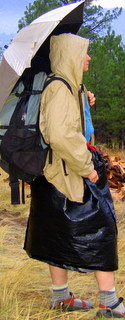 The one ounce hiking rain skirt: Cut the bottom out of at cinch strap garbage bag, put it on and tie around your waist. It will keep you dry and offers great ventilation. Just scrunch up your pant legs to the knee so they don’t wick water and put on your hiking skirt. It’s also nice to have on when you want to sit down and take a break but everything is wet. When in camp, if you hang your food, you can use the hiking skirt as a rain cover for your food bag. Just get the regular garbage bags, not the heavy-duty contractor’s bags: some of them weigh 5 ounces apiece.
This selection of clothing will keep me warm, comfortable, and dry most of the time. Even when it is below zero (-18C) here, when I go out for my walk, just these clothes keep me warm. I have gone much lighter but this is what I find will sustain me through a long hike with varying temperatures comfortably.
About color. After I have been on the trail for a while, I get tired of seeing nothing but brown, green and black. Frogg Toggs used to come in red. I found them cheery to put on. Something colorful is nice to have if you are going to be on the trail for a long time.
My clothes bag makes a nice pillow. If I’m wearing most of my clothes to bed, I augment my clothes bag with the stuff sacks from my sleeping bag and tent, plastic bag pack liner and anything else I can find to make a pillow.
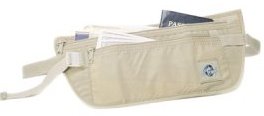 belt worn against my skin around my lower waist in the area that is covered by my pants. Worn against my lower back it was quite comfortable, unobtrusive, and didn’t create bulky lines. I even slept with it on sometimes. The money belt that I used was the Eagle Creek – Deluxe Security Belt. It has two pockets; one big enough to hold plane tickets. It has soft fabric that lies against your back. There are lots of these like this one. I haven’t tried others but the Rick Steves Silk Money Belt
 is made of silk, has a lot of good reviews on Amazon, and has a plastic pocket for your passport which would be nice because moisture from sweat is an issue. Whatever you buy, I would recommend that you make sure it is big enough to hold a plane ticket.
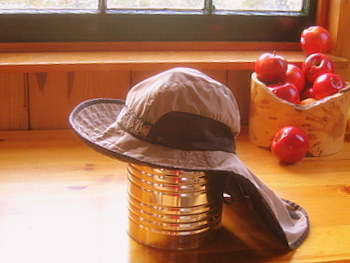 I feel a sun hat is essential. My sun hat is the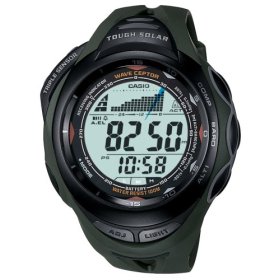
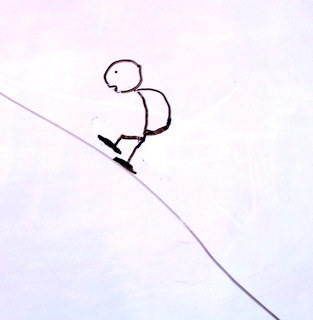 Today, I put an empty propane tank in my backpack, strapped on my snowshoes and headed down through state land to the little store to get if filled. A full 5 gallon propane tank only weighs 37lbs and the whole trip wasn’t more than 5 miles but the tank didn’t ride very well in my pack; it poked me in the spine the whole way and the snow was deep.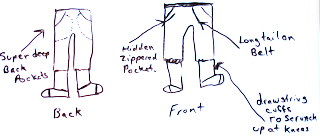
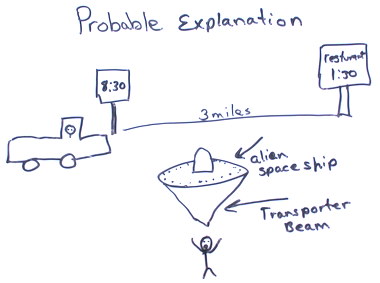 Once, a long time ago, in Nevada, I got up in the morning and went out to eat breakfast. The time sign on the bank said it was 8:30 am but when I got to the restaurant, three miles later, it was 1:30pm and they were no longer serving breakfast.
 I used to skip school and hang out at the downtown library. On the top floor was the periodical room filled with old magazines and microfilm and microfiche of old newspapers. I spent hours panning over newspapers and magazines from the year I was born, thinking there was some clue to who I was, hidden in them.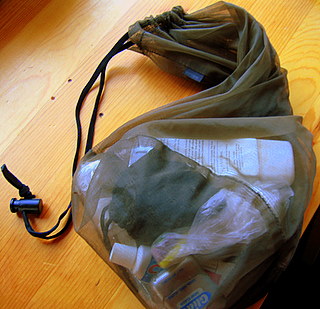
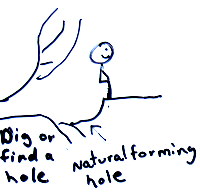 Go a fair distance from the trail, a campsite, or a water source. Dig a hole. I have found the little plastic orange shovel is useless for digging a hole. When the digging is good, my foot, a stick, or a rock will work just as well and when the digging is hard, the shovel is worthless. When the digging is hard, I look for natural holes like uprooted trees, or turn over rocks that have sunk into the earth.
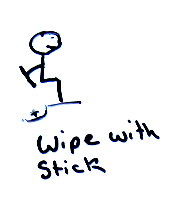 For toilet paper, I use a stick or rock big enough to keep my hands away from any chance of fecal contamination. There is speculation that it isn’t the water that makes hikers sick but there own feces.
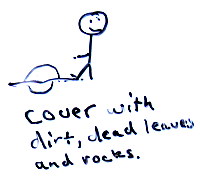 If I have used the hole from an uprooted tree, there is lots of loose soil to bury my poo in. If I have used the hole from a rock, I rake what surface duff and dead leaves I can find over the poo and put the rock back on top of all of it. From reading the